Amazing ErasmusMC covers first ADEPTH procedures
July 2026
Smart sensor measures bone depth and helps surgeons choose the right screw size
Too short, too long, or just right? Choosing the right screw size for complex bone fractures is a matter of millimeters. A screw that’s too short provides insufficient support, and one that’s too long can damage nerves, tendons, or blood vessels. A new smart sensor attached to the drill helps surgeons select the correct screw size more quickly.
Link to the original article in Dutch; https://amazingerasmusmc.nl/algemeen/slimme-sensor-meet-botdiepte-en-helpt-chirurgen-de-juiste-schroefmaat-te-kiezen/
This article was written independently by Amazing ErasmusMC, the news outlet of Erasmus Medical Center in Rotterdam, Netherlands. It is not sponsored content, and no payment or compensation was provided. Below is an unedited DeepL translation in English
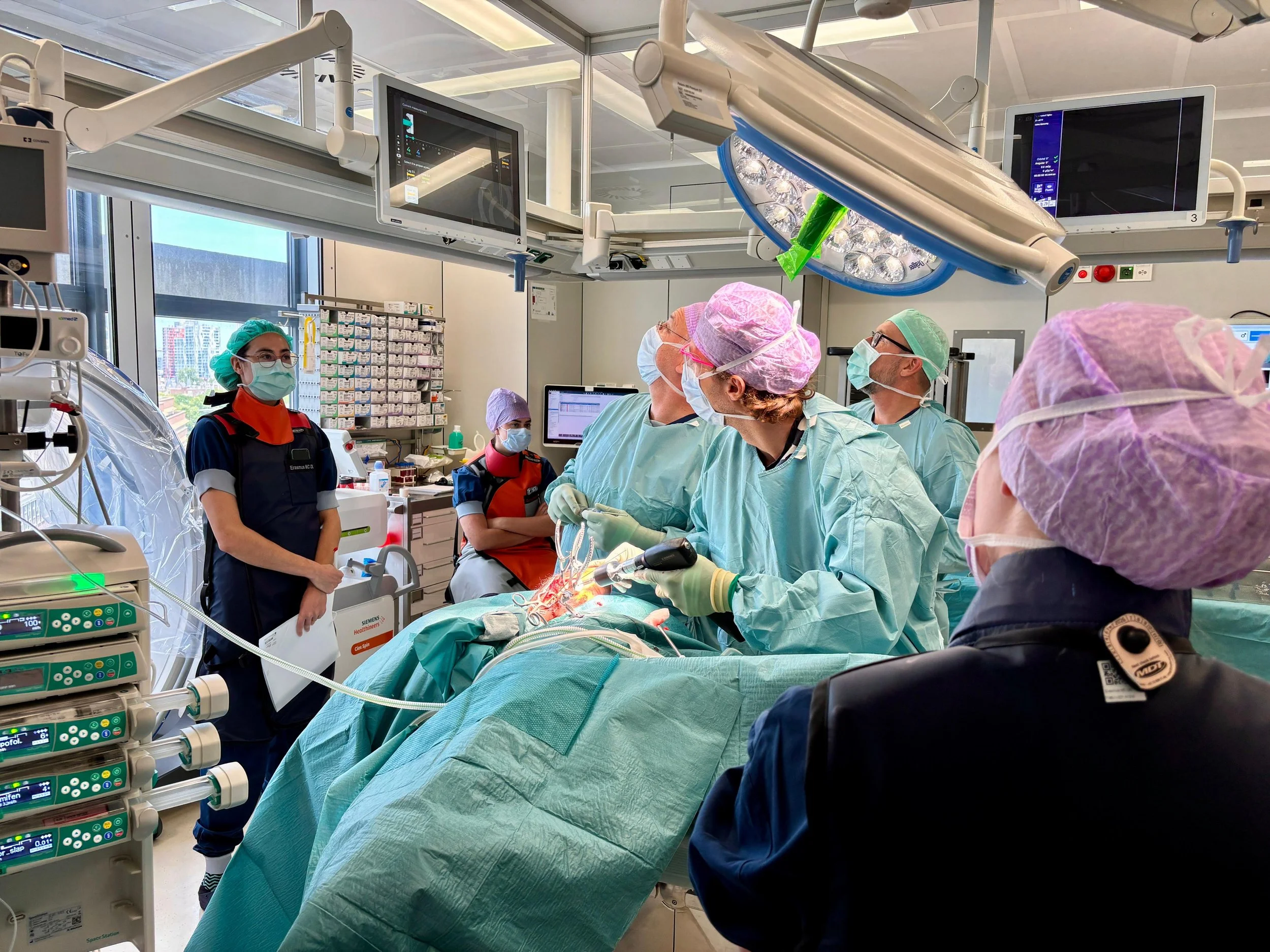
During surgeries on long bones in the arms and legs, the ADEPTH® sensor measures how deep the surgeon is drilling, how much force is being applied, and how fast the drill is rotating. Using that information, the software calculates which screw size is the best fit.
A first
“This is brilliant,” says resident physician Daniël Bakker. He and trauma surgeon Prof. Dr. Michiel Verhofstad have the honor of using the sensor for the first time during a routine surgery. Everyone in the operating room is watching the monitor, which shows in real time how the drill enters the bone and what screw size the sensor indicates. “Can I have a number 20?” Bakker then asks the surgical assistant.
On the operating table lies a patient with a fractured ulna that needs to be stabilized with a plate and seven screws. Because the required screw length can vary per drill hole, the depth of each drill hole must be measured separately. With the sensor on the drill, this now goes much faster than usual, Bakker notes.
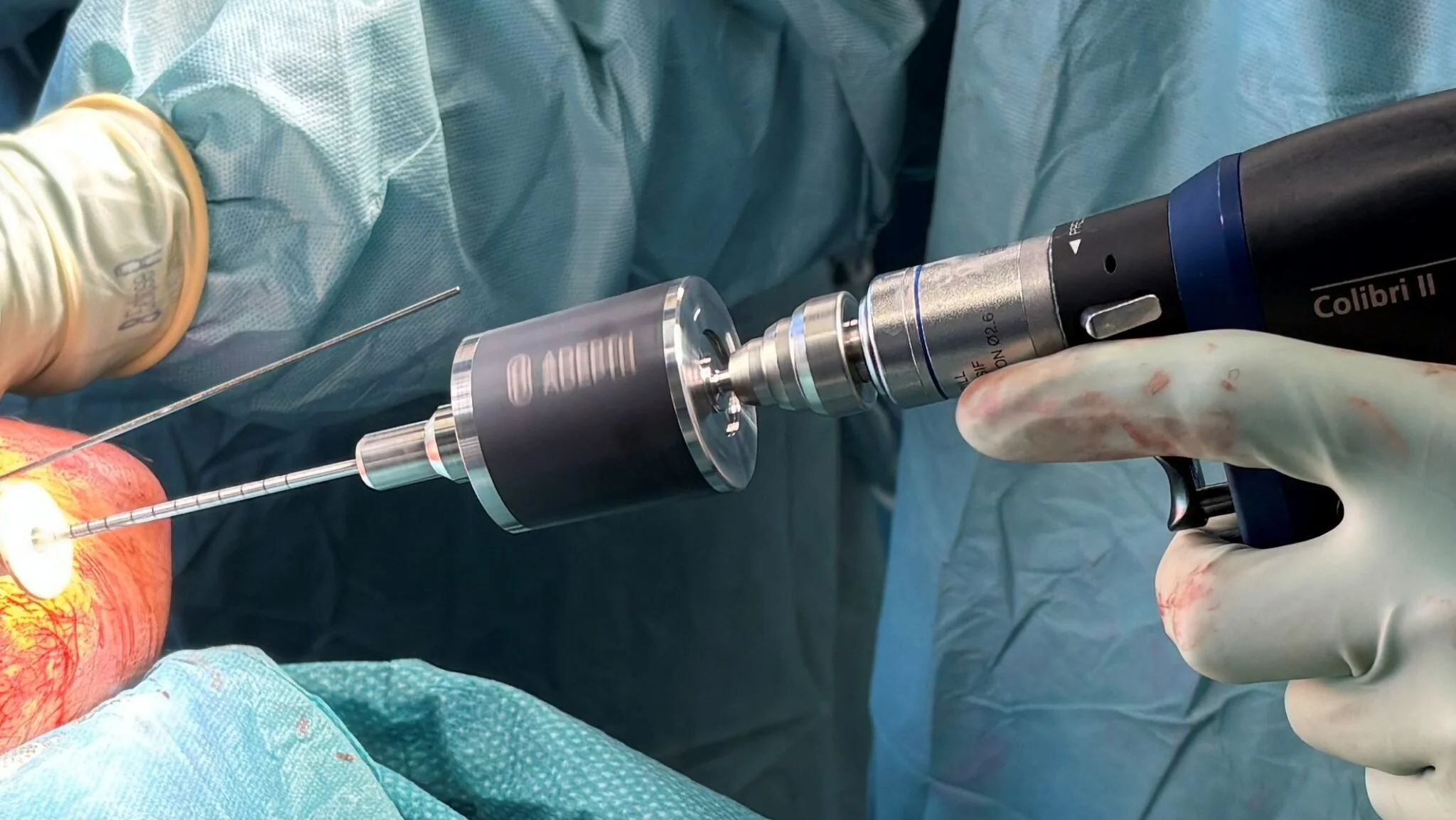
Picture: The ADEPTH® sensor on the drill during drilling.
Once all the screws have been inserted, the X-ray shows that the six screws selected using the sensor are all exactly the right length. The seventh screw, whose length was still determined using the traditional method, turns out to be too long and must be replaced.
“So the sensor does what it’s supposed to do. This allows us to work more accurately and saves us a lot of time, because we only have to screw in the screws once,” says Verhofstad. “In addition, the sensor saves costs because fewer screws are discarded. Screws that turn out to be too long or too short during surgery have to be replaced and, unfortunately, cannot be reused.”
Accuracy and Ease of Use
The smart medical device was developed by a startup in Delft and extensively tested for accuracy and ease of use by the Department of Surgery at Erasmus MC. During an initial study, trauma surgeons used the sensor to drill holes in human bones that were available for scientific research. They then inserted the screws recommended by the sensor and used a CT scan to verify that they fit properly. Once it was confirmed that the sensor worked accurately and safely, a clinical trial involving patients followed.
“These studies are standard procedure when we introduce a new technique,” explains trauma surgeon Mathieu Wijffels. “The results show that the sensor makes the procedure more efficient, saves valuable operating time, and increases patient safety. That time savings is particularly important, because with any surgery, a shorter operating time reduces the risk of infections.”
Learning from Users
After each procedure, the researchers used questionnaires to assess how user-friendly the sensor was. Surgeons and surgical assistants rated it as very good. Their feedback helped to further improve the software. For example, surgeons wanted to know not only which screw size the sensor recommended, but also how the sensor arrived at that recommendation. That’s why a real-time animation now shows, via a monitor or tablet, where the drill bit is located within the bone. “We hope to publish the exact figures and findings soon,” said Wijffels.
No More Depth Gauge
The idea for the sensor arose ten years ago out of frustration with the old-fashioned-looking depth gauge that had been in use for years. It is a long stainless-steel instrument with a hook at the end. By inserting it into the drilled hole, you can read the depth on the ruler inside it.
“Moving the hook is either too stiff or too loose, which makes it harder to measure the depth accurately,” explains Verhofstad as he demonstrates the depth gauge. “Then the screw is either too long or too short, and a new one has to be installed. With the sensor, we can skip a step because we no longer need to measure bone thickness separately. That saves time during surgery.”
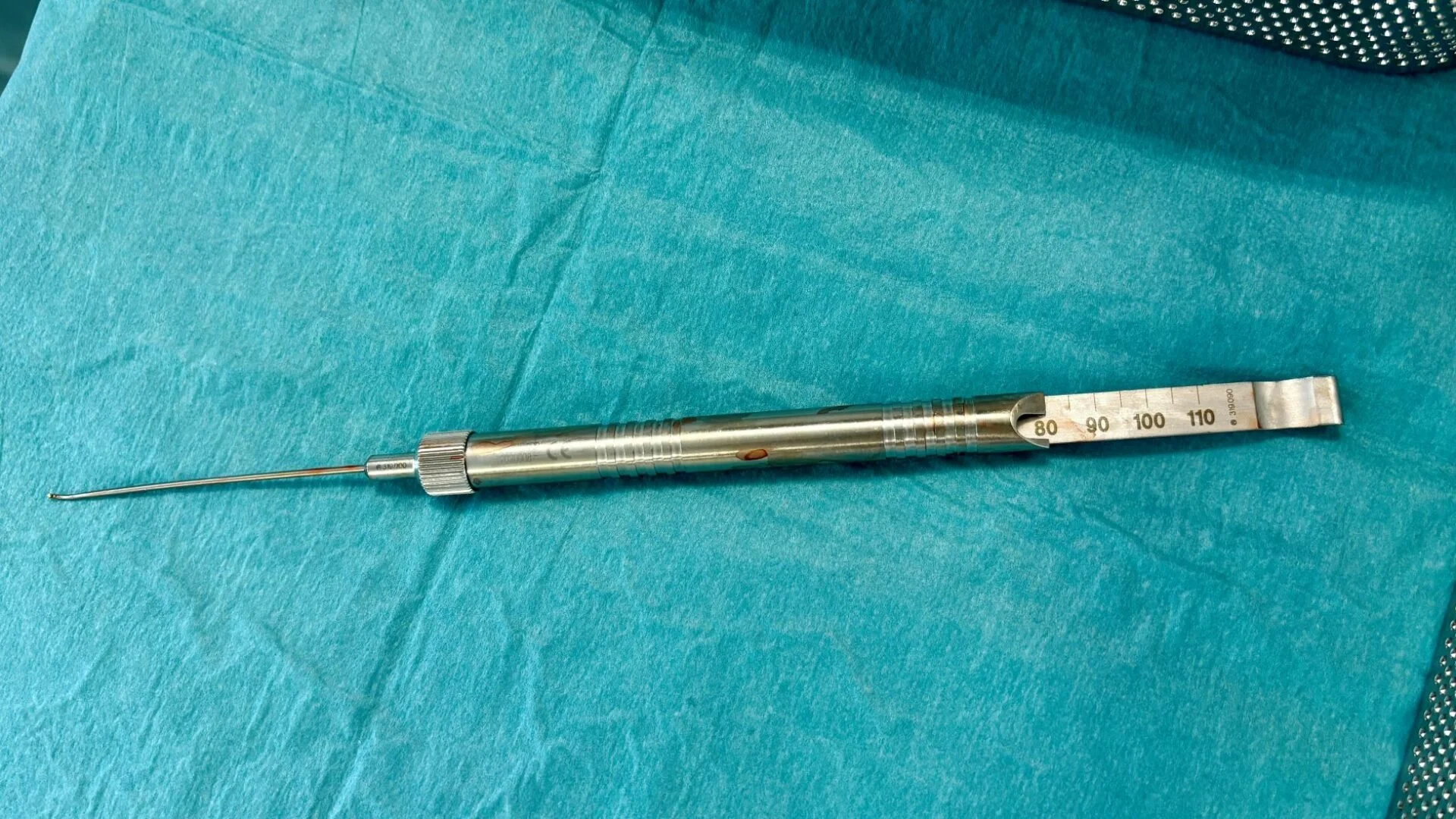
Picture: This is what the depth gauge looks like.
A definitive alternative to the depth gauge in the form of a sensor took some time to materialize. In recent years, numerous prototypes have been tested and refined. “Four years ago, all we had was a 3D-printed prototype,” recalls Software Engineer Tijs Moree of the startup SLAM Ortho.
Thanks to the collaboration with Erasmus MC, development gained momentum. “The pilot lasted a year, and we learned a lot during that time—not only how to make the sensor more user-friendly, but also how to make it suitable for sterilization. That was a real challenge.”
Sterile Reuse
The device and software had to be able to withstand high temperatures and be suitable for the cleaning and sterilization processes used in the hospital. “Together with the Central Sterilization Department (CSA) at Erasmus MC, we conducted extensive testing to determine whether the sensor could be properly cleaned and sterilized and was suitable for practical use. In doing so, we gratefully drew on their expertise in cleaning, disinfecting, sterilizing, and packaging all medical instruments,” Moree explains further.
Using this knowledge, adjustments were made, allowing the sensor to be reused up to thirty times. “Together, we developed a special tray that allows the sensor to be safely stored and cleaned. However, we also had to make some compromises. For example, there are no batteries that can withstand this temperature, so the sensor now runs on a non-rechargeable battery with a long lifespan.”
Future applications
For now, the sensor is only suitable for the long bones of the arms and legs. The next step is to apply it to smaller bones and joints. “We now have the foundation we need to work with,” says Moree. “Next, we’ll explore how we can provide surgeons with insights into bone quality to tailor treatment even better to the patient.”
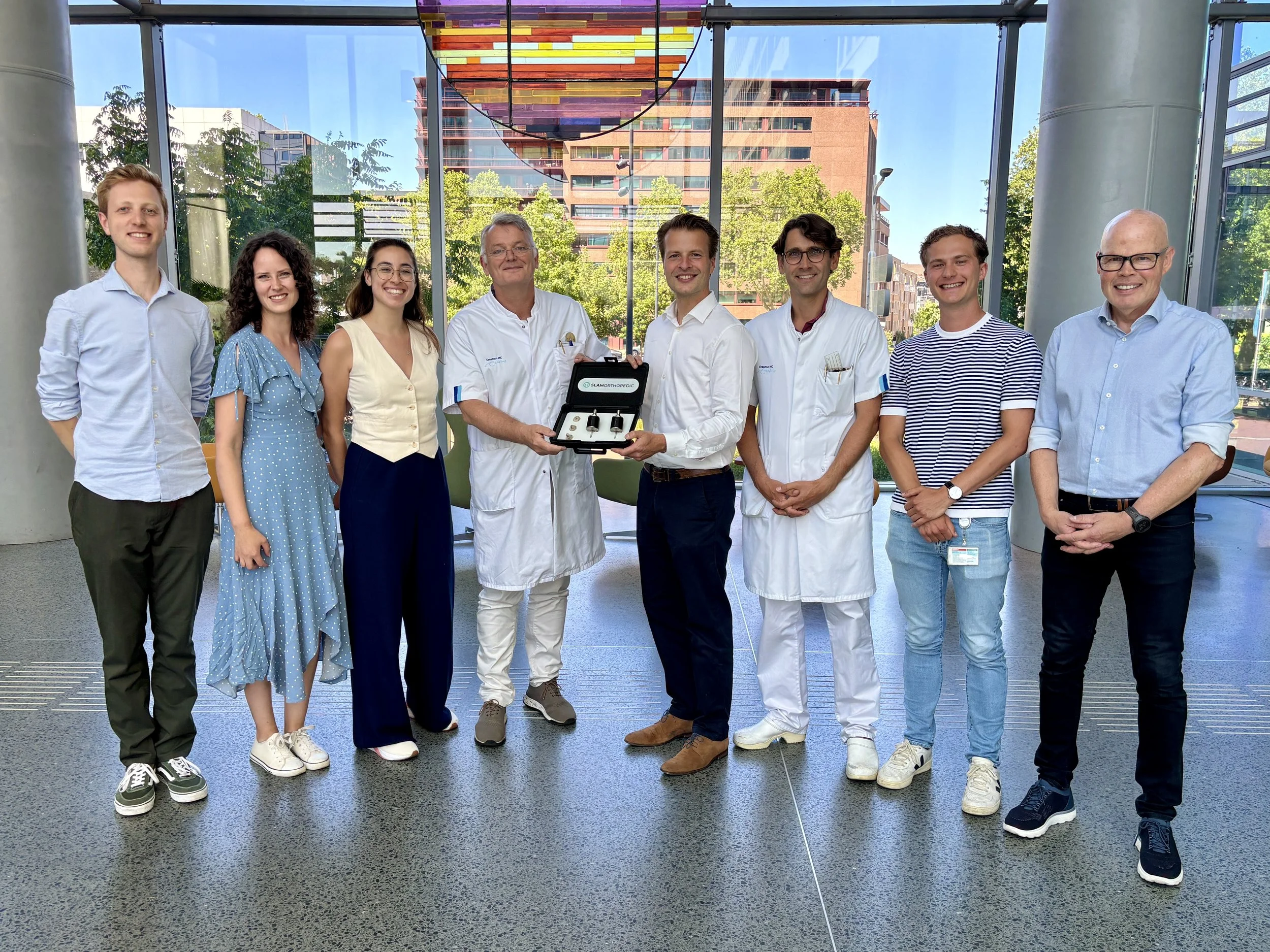
Picture: Trauma surgeons Michiel Verhofstad (left) and Mathieu Wijffels (right) receive the first ADEPTH® sensors from the SLAM Ortho team. On the far left is Tijs Moree of SLAM Ortho.